
 New Mexico is a state my wife and I have visited and photographed many times over the years. Returning after one of our earliest trips, a co-worker introduced us to the work of author Tony Hillerman. Hillerman is best known for his Navajo Tribal Police mysteries featuring Jim Chee and Joe Leaphorn. Hillerman’s in-depth knowledge and appreciation of Navajo culture are superbly detailed in his work. Above all, they are all great reads.
 Hillerman was not the first mystery writer to introduce a fictional Native American detective. However, he brought a new depth of understanding and revealed to many how sophisticated the Navajo nation was. His first novel in the series, The Blessing Way came out in 1970; eighteen books later, his last, The Shape Shifter, was published. Hillerman’s novels are so well versed in the Navajo ways they are used as educational tools in Navajo schools.
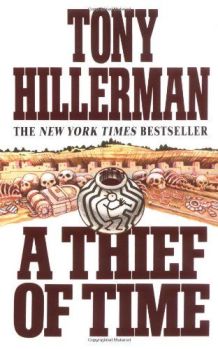 Some years later, in 2008, during another one of our trips to New Mexico, we stopped by a local bookstore in Albuquerque’s Old Town. We were on the hunt for a couple of Southwestern flavored mystery novels to read on the plane ride back home. We asked the proprietor if any new Hillerman books were coming out. We mentioned how we have not seen one in quite some time. He sadly informed us that Hillerman, a steady visitor to his store over the years, was seriously ill and he doubted there would be any more books forthcoming. We learned a short time late Tony Hillerman died in Albuquerque on October 26, 2008.
Hillerman’s career as an author has roots going back to 1963 when he, with the blessing of his wife, enrolled in the graduate program for creative writing at the University of New Mexico. He received his master’s degree in 1965. He wrote a collection of essays on life in New Mexico called The Great Taos Bank Robbery as his thesis. His work was so well liked he was asked to stay on and teach journalism. [1]
 While still working in the academic world he wrote his first novel, The Blessing Way, featuring Joe Leaphorn. It was published in 1970. The book became a finalist in the Edgar Allan Poe Award for Best First Novel.[2] Hillerman continued to write but it was not until the publication of his 1986 book, A Thief of Time, that he became a bestselling author.
Tony Hillerman was born in Sacred Heart, Oklahoma on May 27th, 1925. The youngest of three children, he served in the Army (103rd Infantry Division) during World War II earning himself a Silver Star, a Bronze Star, and a Purple Heart after being wounded in 1945. After the war, Hillerman attended the University of Oklahoma where he would meet his future wife, Marie Unzer. Between the years of 1948 and 1963, he worked as a journalist for a variety of newspapers including the Morning Press-Constitution (Oklahoma), Borger News Herald (Texas) and The New Mexican (Santa Fe) where he became the paper’s top editor.
Four of Hillerman’s novels have been turned into movies, one a feature film and three made for television. The first film, The Dark Wind, was made in 1991. It was co-produced by Robert Redford, a Hillerman admirer, and directed by documentary filmmaker Errol Morris. Lou Diamond Philips starred as Jim Chee and Fred Ward as Joe Leaphorn. Sadly, the film had a troubled history and never saw a big screen release in theaters. It did make it to DVD. Redford called it “ill-conceived” as well as miscast in what he hoped would be the start of a series of films based on Hillerman’s work.
 It would take Robert Redford more than ten years and a different direction to bring three more Hillerman novels to the screen; the small screen. Skinwalkers (2002) premiered on PBS and became the highest-rated program of the year for the network. The film starred Adam Beach as Jim Chee and Wes Studi as Joe Leaphorn. PBS quickly agreed to do two more Hillerman based films, Coyote Waits and A Thief in Time. The three films complement the novels and are an excellent way to extend the pleasures of Hillerman’s tales.
In 2013, Anne Hillerman, Tony’s daughter,[3] published her first novel, Spider Woman’s Daughter, a continuation of the Jim Chee/Joe Leaphorn series along with Chee’s new bride Bernadette Manuelito. Anne’s second Jim Chee/Joe Leaphorn novel, Rock with Wings, was published in 2015. Anne’s third novel in the series, Song of the Lion, will be published this coming April. Sad as it is that Tony Hillerman is no long with us, it is good to know the series continues.
Netflix is currently streaming the three PBS films under the title, Skinwalkers: The Navajo Mysteries. It come across as a three part TV series but it’s not. They are three separate movies.
Notes:
[1] Stead, Deborah, New York Times, Tony Hillerman’s Cross Cultural Mystery Novels, August 16, 1988.
[2] Tony Hillerman Country Website.
[3] Anne Hillerman previously worked with her father on the non-fiction book, Tony Hillerman’s Landscape: On the Road with Chee and Leaphorn
 Back in January, we drove down to Sarasota to visit two local parks, Myakka River State Park and the Oscar Scherer State Park. Driving along State Rd. 72 on our way to Myakka, we passed by the Sarasota National Cemetery, 295 acres run by the Department of Veteran Affairs. We stopped and I took a few photos.



 My latest e-book of short stories is nearing completion. I am happy to share some information including the book cover and title. The collection will consist of twelve tasty tales of twisted love, revenge, money, lust and murder. Here are the titles of the stories included:
 At the age of twenty-one, Catherine Leroy became the first news photographer, male or female, to parachute into combat with American troops in Vietnam. During the 1968 Tet offensive, Leroy and her camera were captured by the Viet Cong. Before managing to convince her captures to release her, she would became the first photographer to shoot images of the enemy in their own back yard. Her story is both amazing and inspiring.
 Leroy was born in Paris in 1944 (some accounts say 1945). She grew up in a Catholic convent where she discovered copies of Paris Match magazine filled with images of war. The photos were powerful and made a lasting impression on the petite young girl; she stood barely five feet and weighted less than 100 pounds. With the images of war etched in her head, she recognized both the physical and emotional toll war took on the human condition. Early on she was set on becoming a war photojournalist. At the age of twenty-one with approximately one hundred dollars in her pocket and a Leica M2 in her camera bag, Leroy purchased a ticket for Laos and then on to Vietnam. She did have the name of a contact, Horst Faas, the celebrated photographer who at the time was the Associated Press bureau chief. The year was 1966.





 Two films featured in my book, Lessons in the Dark, will be coming soon to TCM. Tonight at 10:15PM (Eastern) the superb Great Depression era musical Gold Diggers on 1933. The film stars Joan Blondell, Ginger Rogers, Ruby Keeler and Dick Powell along with an excellent supporting cast that includes Aline McMahon, Ned Sparks, Guy Kibbee and Billy Barty.
 On Friday (Feb. 10th) at 8PM (Eastern) don’t miss John Ford’s masterful production of John Steinbeck’s classic novel, The Grapes of Wrath. Henry Fonda stars as Tom Joad. The cast includes Academy Award winner Jane Darwell and John Carradine. Look for a very young Darryl Hickman (Dobie Gillis) in a small role.


 John Greco Author/Photographer