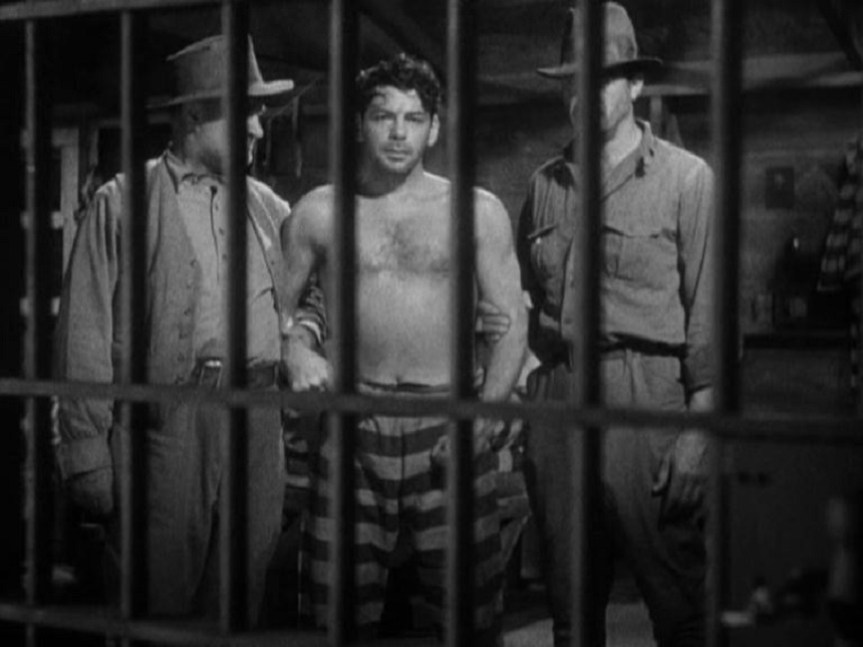
The classic pre-code prison drama, “I Am A Fugitive From A Chain Gang” will be showing on TCM tomorrow morning at 6:15AM eastern time. Be sure to set your DVR.
You can read more about it in my e-book “Lessons in the Dark.” Available on Amazon.com. Click on the link below.
One of the most iconic images of James Dean shows the actor walking right down the middle of the Times Square crossroads. It’s raining. He’s wearing an overcoat, his collar is turned up, he’s hunched over and a cigarette is dangling from his mouth. The photograph was taken by Dennis Stock in 1955. At the time, both Dean and Stock were still relatively unknown in the respective careers. Dean would soon explode onto the screen in East of Eden and Rebel Without a Cause. As quickly as he became a star, it would be extinguished after his fatal car crash in September 1955. The star died, but an iconic legend was born.
Photo by Dennis Stock
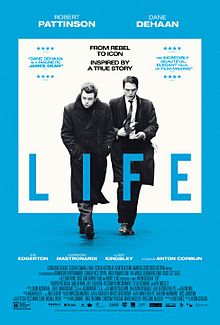
I accidently found this film while browsing through a local library earlier this week. I was unfamiliar with it, in truth, I never heard of it before. What caught my eye was the DVD’s cover image that loosely reflects the famous shot of James Dean walking down the middle of Times Square. Only in this version there is another guy with him with a 35mm camera around his neck, and unlike the more casually dressed Dean, wears a conservative white shirt and tie. Life, (the title as you will learn has a double meaning) it turned out was the story of the unusual short friendship between James Dean and photographer Dennis Stock. I had to watch this!
For a short period in 1954-55, Dennis Stock would photograph James Dean in Hollywood, New York and in Dean’s hometown in Indiana. In Life, directed by Anton Corbijn, we follow this short lived friendship between a still unknown actor and a ambitious photographer, still looking for his own big break. Stock works for the Magnum Agency and convinces his boss that this young nobody of an actor is going to be the next big thing as soon as his first film, East of Eden, is released. Stock wants his bosses to convince Life magazine to do the story.
Corbijn is definitely suitable for the subject matter considering his previous life as a rock photographer. Dean is played nicely by Dane DeHann who more through mannerisms and speech than through physical looks captures Dean’s essence. Stock is played by Robert Pattinson. He’s a bit quirky and his personal life is a mess. Married young, he’s divorced with a young boy who he hardly sees. When he does see the boy, it’s uncomfortable. While Stock works for Magnum, his career is not going in the direction he wants. He wants to be an artist and have an exhibit instead of photographing the latest movie premiere.
Each in their own way are fish out of water. They meet at a party in Hollywood given by director Nicholas Ray who is considering Dean for his new film Rebel Without a Cause. Stock is there on one of his routine assignments. They begin an uneasy friendship. Stock comes to see Dean as someone special and on the rise. He convinces his bosses at Magnum, Dean would make a great subject for a photo essay for Life magazine. The assignment is approved, but Dean turns out to be a relentlessly elusive subject to tie down for a shoot. During the course of their short friendship, Stock followed Dean from Hollywood to New York and even back to his hometown farm in Indiana. In the course of this short time, Dennis Stock creates a series of portraits of the artist as a young rebel. Many of the photos shot during this period turned out to be some of most intimate moments of Dean we ever get to see, especially the images of his life back in Indiana.
Dane DeHaan and Robert Pattinson as James Dean and Dennis Stock
Like James Dean, Corbijn’s film is all about mood and not action. To some it may seem like it meanders, but I felt that it fits the zigzagging mood of the two lead characters. Dean wants to be a star yet he fights the Hollywood system. Stock wants to be a photographic artist, but seems tied down by money worries and opportunity. The two men eventually go their own ways when Dean heads back to Hollywood to begin filming Rebel Without a Cause and later Giant, both released posthumously and kicking off Dean’s legendary status.
Ben Kingsley plays a thug like Jack Warner and almost steals the film from its two lead actors. In one scene, Warner, after Dean ridiculed a Warner Brothers film during an interview, warns the young actor he better stay in line or he will be quickly dumped.
Ben Kingsley as Jack Warner impatiently waiting for James Dean to show up at the New York premiere of East of Eden.
After Dean went back to Hollywood, Dennis Stock remained in New York and focused his work on the city’s Jazz Scene. Over the next few years, he photographed artists like Billie Holiday, Louis Armstrong, Gene Krupa and Miles Davis among others. Most were not performance photos, but more personal and atmospheric moments that he captured. Stock liked to stay quietly in the background capturing those private moments when his subjects were unguarded. The best of his Jazz work were compiled into a book called, Jazz Street, published in 1962. Over the course of his long career, Dennis Stock turned his camera on many subjects including the youth revolution of the late 60’s including hippie communes in New Mexico and California. Later in life he did a lot of nature and landscape photography. One thing that always remained consistent was that Dennis Stock always photographed what he wanted. At the University of Texas where he once addressed a roomful of photojournalism students Stock said, “I’ve never taken an assignment, I’ve always photographed what I wanted to be photographing, and then worried about selling the pictures or doing something with them afterwards. I’ve always shot for myself, and when you’re shooting what you’re interested in shooting, you’re always going to be happy.”
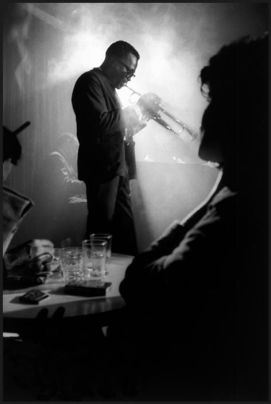
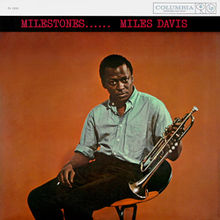
Miles Davis by Dennis Stock
Dennis Stock was born in 1928. A native New Yorker, he was raised in The Bronx and grew up during the Great Depression. At the age of 17, he left home and joined the Navy. After his discharge, Stock apprenticed under photographer Gjon Mili between the years 1947 and 1951. He also worked closely with W. Eugene Smith. Stock first gained recognition after he was one of ten winners in a Life magazine photography contest. Some of his fellow winners at the time included Ruth Orkin, Robert Frank and Elliot Erwitt. Heady company. This was soon followed by a position with Magnum. During his early Hollywood days, Stock photographed stars like Audrey Hepburn, Marlon Brando, Marilyn Monroe, John Wayne and many others. Like his photos of James Dean, the photos were generally intimate, behind the scenes and unguarded moments. In 1955, his James Dean photo essay was published in Life just a short period before the actor’s death.
Over the years, there were more books published, exhibits, lectures and photographs. Always photographs. Dennis Stock died in 2010 at the age of 81. As the film, Life, suggest, Stock’s personal life was messy. He was married several times; his last wife was author Susan Richards. At the time of his death, he had three children, a grandson and five great grandchildren.
A posthumously released documentary on Stock called, Beyond Iconic: Photographer Dennis Stock made the film festival circuit in 2011. In was directed by Hanna Sawka Hamaguchi and narrated by Stock prior to his death. The film seems to be sadly only available to academic institutions and resources at exorbitant prices.
Sources:
Sharpio, T. Rees, Dennis Stock, 81; Magnum Photographer Shot Iconic Moments, Washington Post, Jan. 14, 2010
Dunlap, David W. Dennis Stock, Photographer of Intimate Portraits, Dies at 81, New York Times, Jan, 15, 2010
A Small Sampling of Photographs by Dennis Stock
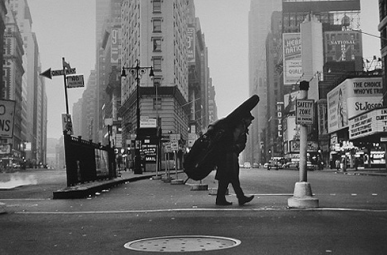
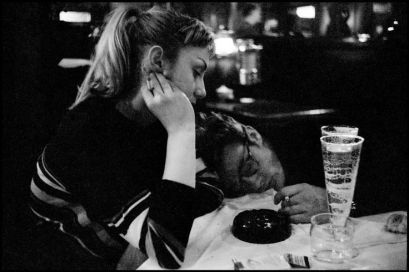
Musician Bill Crow crossing Times SquareOn the backlot of 20th Century Fox during the filming of Planet of the ApesJames Dean and unknown friendVenice Beach, CA. Rock Concert – 1968Miles Davis ‘Milestone’ album coverJames Dean and his young cousin Marcus
Okay, I admit I am bias about New England. It’s my favorite part of the country. There’s a quaint historical feel to almost everywhere you go. It’s in the architecture, the landscape, the air and the people. Adding to my bias is the fact my wife was born and raised in Marlboro, MA. Over the years, we have travelled to every state that makes up the geographical area known as New England. Some states like Vermont, Massachusetts and Maine are particular favorites, but I have found something fascinating and stimulating in all of them. So when I came across Jacqueline T. Lynch’s collection of essays on what it means to be a New Englander I knew I had to read it. Lynch writes in her introduction, “This is not about New England the place as it is about New England the idea…” She focuses on ideas that came out of the nineteen century and moved us into the twentieth century.
We meet many well-known figures like Annie Sullivan, Louisa May Alcott, Lizzie Bordon and other historical figures. There are also articles about lessor known individuals particularly women who became an important part of the workforce during the Industrial Revolution. We also learn about historical landmarks such as Norman’s Woe, a small uninhabited island just off shore from Gloucester, MA. The island and its waters are noted for a series of shipwrecks over the years. Maine poet, Henry Wadsworth Longfellow, immortalized it in his poem, The Wreck of the Hesperus.
Lynch writes passionately about her subjects and New England in general. Her love for New England shines through on every page. Anyone interested in the history of New England and its influence will find these essays an absorbing read.
It was back in 1962 when Michael Bloomfield heard Bob Dylan’s first album. He didn’t think much of it. A year later, Bloomfield met Dylan and watched him perform when the folk singer was appearing in a Chicago club. This time he was knocked out by him. They spent some time jamming and evidently got along well. They met again in 1964 when Bloomfield was in New York for a recording session with John Hammonds Jr. In June 1965, Bloomfield received a phone call from Dylan saying he’s making a new album. Would he like to play on it? Bloomfield, at the time, was part of the still unrecorded Paul Butterfield Blues Band quickly agreed and flew to New York. The album would turn out to be Highway 61 Revisited. He didn’t play on all tracks, but his guitar was featured on Like a Rolling Stone, Tombstone Blues and Maggie’s Farm. It was the start of a personal and professional relationship that lasted on and off almost until Bloomfield’s death in 1981.
1965 would turn out to be a pivotal year for the guitar man. Recording on Dylan’s historic album was only the start. During those sessions he met Al Kooper who would become an important part in Bloomfield’s career later on. The year would also see Bloomfield play at the famous Newport Folk Festival, not only as part of the Butterfield Blues Bland, but as part of Dylan’s band during his infamous “going electric” set. Later that year, The Butterfield Blues Band, up to this point only known in their hometown of Chicago, would record their first album.
Ed Ward’s revised biography, Michael Bloomfield: The Rise and Fall of an American Guitar Hero is an aptly titled, essential and absorbing read for anyone interested in the history of rock and roll. This edition includes new interviews as well as the complete Rolling Stone interview. Born to a upper middle class family, Bloomfield. like many artists, was an outsider growing up. By the time he was 15 he was frequenting Chicago’s Southside nightclubs where blues singers like Muddy Waters and Howlin’ Wolf performed. The black musicians didn’t take him seriously at first and he admits that in the beginning he wasn’t very good. He learned quickly and he had the talent and style to convince one and all.
Bloomfield made two albums with Butterfield before differences between the two made him leave the group. Fortunately, that was not before the second Butterfield album, East-West, added to Bloomfield’s growing reputation.
After leaving Butterfield, he formed the Electric Flag which included Nick Gravenites and Buddy Miles. Their first project was the soundtrack for Roger Corman’s The Trip. They appeared at the Monterey Pop Festival in 1967 and also released their first real album. However, for Bloomfield, it would not last long. He left the group soon after. In 1968, he reunited with Dylan session player Al Kooper, and along with Stephen Stills, unintentionally formed what was essentially the first super group. Their album, Super Session, was an artistic and commercial success. It was followed by The Live Adventures of Mike Bloomfield and Al Kooper, recorded live at the Fillmore West. Bloomfield felt the albums were “scams” and calling it “super” was just a way to sell records.
Ed Ward (Rock of Ages: The Rolling Stone History of Rock & Roll) chronicles Bloomfield’s career with plenty of first hand accounts from family, friends and fellow musicians plus interviews the author did with his subject. Like many musician’s of the era, Bloomfield was plagued by drugs. Insomnia was also a life long problem he had since his teen years.
Compared to many of his contemporaries, Bloomfield is less remembered today than he deserves. One only has to listened to his work on Highway 61 Revisited or Super Session to realize this is a guy who could give Eric Clapton, Jimmy Page and Jimi Hendrix a run for their guitar money. This book, along with the 1984 album, Bloomfield: A Retrospective, which includes 27 essential tracks as well a documentary film, hopefully will remedy that.
On February 15, 1981, Michael Bloomfield, like Hank Williams, was found dead inside an automobile. He was 37 years old.
It happened on September 30, 1976. Martin Ritt’s film, The Front, starring Woody Allen, opened that day at the Coronet theater in New York. I have been, and still am, a huge Woody Allen fan since his standup days when I first saw him on the Ed Sullivan Show.
At the time, I was living and working in New York. Being the Woody fan that I was, I took a half day off from work to go see The Front. The Coronet theater was located on Manhattan’s Eastside. The Coronet, its sister theater, the Baronet along with the Cinema I and Cinema II were high end theaters. All the studios and distributors wanted their big films to be booked into these theaters. Foreign films like Bergman’s Cries and Whispers and Antonioni’s Blow-Up to domestic works like The Exorcist and The Graduate had their premiere engagements at one of these fours theaters located on the Upper East Side. The four theaters filled the entire block, between 59th and 60th streets, except for a Bookmasters store in between.
The theater was fairly crowded for a weekday afternoon. In New York, Woody was always a big draw. After the film ended, everyone began filing out. It was at this time, I suddenly noticed walking out right in front of me among the crowd were John Lennon and Yoko Ono. Growing up in the 60’s, and a Beatles fan, I pretty much stood there stunned. In truth, while I saw the both of them, it was Yoko who I first recognized. I had to take a second look at who was standing next to her. Of course, it was Lennon.
They and everyone continued to slowly leave the theater. A few folks said hello and he returned the acknowledgement. Most people just looked and gawked, like I did. Some, I am sure didn’t even recognize them, though they are hard to miss. New Yorker’s can be a jaded bunch and seeing famous people in the street is not an uncommon experience. A few famous people though can even shake up the jaded New Yorker. Lennon was one of those.
I purposely stayed a few steps behind them all the way out of the theater until we all were out in the street. For those who are unaware, that block of theaters were located directly across the street from Bloomingdales. That was John and Yoko’s next destination. They crossed over 3rd avenue and disappeared in the department store. I stood by the theater watching them, cursing to myself that I did not have my camera with me. This naturally was in the days long before cellphones.
I never saw The Beatles in concert, but over the years I did get to see Paul, George and Ringo separately in concerts. Never did with John, however, I did get to go to the movies with him… sort of.
Walt Longmire, portrayed wonderfully by Australian actor Robert Taylor, rides again this month with a doubleheader for fans of the sturdy Gary Cooper type sheriff of Absaroka County. Despite Taylor being from half way around the world he sounds and looks like a true westerner. Continue reading “Longmire is Back!”→
The new TV fall season has barely begun, yet what is most likely going to be one of the fall’s most interesting shows premiered on Cinemax last Friday night. Quarry is based on a series of Max Allan Collins novels. The show follows the story of Mac Conway (Logan Marshall-Green), a recently discharged marine just back from Vietnam. Set in the early 1970’s, the political winds of the county were blowing against the war. Unlike soldiers coming back from Iraq and Afghanistan now, nobody was thanking Vietnam Vets for their service. Mac and his fellow marine and friend, Arthur, are greeted by protestors at their home town Memphis airport. Continue reading “Quarry – New Cinemax Series Scores A Hit”→

 The classic pre-code prison drama, “I Am A Fugitive From A Chain Gang” will be showing on TCM tomorrow morning at 6:15AM eastern time. Be sure to set your DVR.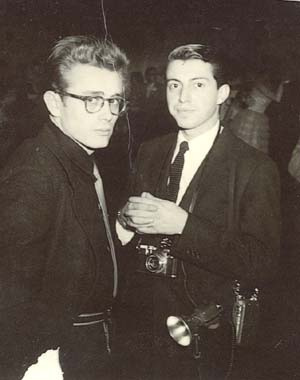

 For a short period in 1954-55, Dennis Stock would photograph James Dean in Hollywood, New York and in Dean’s hometown in Indiana. In Life, directed by Anton Corbijn, we follow this short lived friendship between a still unknown actor and a ambitious photographer, still looking for his own big break. Stock works for the Magnum Agency and convinces his boss that this young nobody of an actor is going to be the next big thing as soon as his first film, East of Eden, is released. Stock wants his bosses to convince Life magazine to do the story.





 Okay, I admit I am bias about New England. It’s my favorite part of the country. There’s a quaint historical feel to almost everywhere you go. It’s in the architecture, the landscape, the air and the people. Adding to my bias is the fact my wife was born and raised in Marlboro, MA. Over the years, we have travelled to every state that makes up the geographical area known as New England. Some states like Vermont, Massachusetts and Maine are particular favorites, but I have found something fascinating and stimulating in all of them. So when I came across Jacqueline T. Lynch’s collection of essays on what it means to be a New Englander I knew I had to read it. Lynch writes in her introduction, “This is not about New England the place as it is about New England the idea…” She focuses on ideas that came out of the nineteen century and moved us into the twentieth century.
 It was back in 1962 when Michael Bloomfield heard Bob Dylan’s first album. He didn’t think much of it. A year later, Bloomfield met Dylan and watched him perform when the folk singer was appearing in a Chicago club. This time he was knocked out by him. They spent some time jamming and evidently got along well. They met again in 1964 when Bloomfield was in New York for a recording session with John Hammonds Jr. In June 1965, Bloomfield received a phone call from Dylan saying he’s making a new album. Would he like to play on it? Bloomfield, at the time, was part of the still unrecorded Paul Butterfield Blues Band quickly agreed and flew to New York. The album would turn out to be Highway 61 Revisited. He didn’t play on all tracks, but his guitar was featured on Like a Rolling Stone, Tombstone Blues and Maggie’s Farm. It was the start of a personal and professional relationship that lasted on and off almost until Bloomfield’s death in 1981.
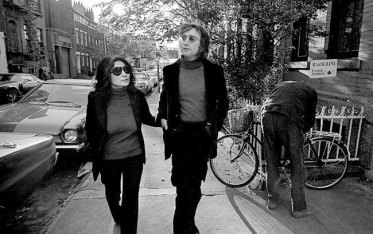 It happened on September 30, 1976. Martin Ritt’s film, The Front, starring Woody Allen, opened that day at the Coronet theater in New York. I have been, and still am, a huge Woody Allen fan since his standup days when I first saw him on the Ed Sullivan Show.
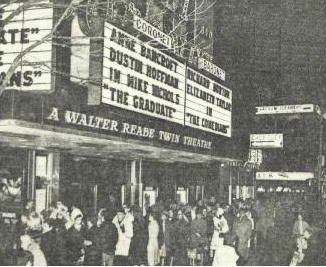 At the time, I was living and working in New York. Being the Woody fan that I was, I took a half day off from work to go see The Front. The Coronet theater was located on Manhattan’s Eastside. The Coronet, its sister theater, the Baronet along with the Cinema I and Cinema II were high end theaters. All the studios and distributors wanted their big films to be booked into these theaters. Foreign films like Bergman’s Cries and Whispers and Antonioni’s Blow-Up to domestic works like The Exorcist and The Graduate had their premiere engagements at one of these fours theaters located on the Upper East Side. The four theaters filled the entire block, between 59th and 60th streets, except for a Bookmasters store in between.
 The theater was fairly crowded for a weekday afternoon. In New York, Woody was always a big draw. After the film ended, everyone began filing out. It was at this time, I suddenly noticed walking out right in front of me among the crowd were John Lennon and Yoko Ono. Growing up in the 60’s, and a Beatles fan, I pretty much stood there stunned. In truth, while I saw the both of them, it was Yoko who I first recognized. I had to take a second look at who was standing next to her. Of course, it was Lennon.
 Ivan G. Shreve Jr. of Thrilling Days of Yesteryear gave a fabulous review of my e-book. You can read it here!
 Walt Longmire, portrayed wonderfully by Australian actor Robert Taylor, rides again this month with a doubleheader for fans of the sturdy Gary Cooper type sheriff of Absaroka County. Despite Taylor being from half way around the world he sounds and looks like a true westerner.
 John Greco Author/Photographer