
Few authors get to portray their own lead character in a movie. Sure, Stephen King has had cameo roles in many films based on his work including Pet Sematary, Thinner, Sleepwalkers. Peter Benchley had a cameo as a TV reporter in the screen version of his best selling novel Jaws, and William Peter Blatty appeared early on in the role of a movie producer in the movie version of The Exorcist. Other authors have made brief appearances in film versions of their works, but none have ever portrayed their own iconic character in a leading role except for Mickey Spillane.

Mickey Spillane as Mike Hammer and Shirley Eaton in “The Girl Hunters”
In 1963, Mickey Spillane played his legendary P.I., Mike Hammer in The Girl Hunters. The film is middle of the road, worth seeing, but Spillane’s lack of talent as an actor is evident. The novel, the seventh in the series, deals with an alcoholic Hammer whose binge drinking has been going on ever since his beloved Velda has gone missing and is presumed dead for the past seven years. He receives a second chance and inspiration when he learns there’s a chance Velda may still be alive.
While Sam Spade and Philip Marlowe worked on the outskirts of the law, Mike Hammer found the legalities of the system to be a hindrance to his own brand of righteousness. Hammer was a tough, no holds barred P.I., extreme in his use of violence even by today’s standards. A right-wing, anti-communist, Hammer would have made both Spade and Marlowe shake in their boots. You might call Hammer the father to Clint Eastwood’s Harry Callahan, both are more vigilantes than lawmen and both had little use for ethical boundaries of the law when pursuing a criminal. Hammer has no problem shooting a killer in the gut and while watching him die kick his teeth out, or maybe he’ll just put a cigarette out in the victim’s eye. In Dirty Harry, Harry Callahan shoots the suspected serial killer known as “Scorpio” in the leg, even though he surrendered and had his hands up in the air. Harry though isn’t finished yet, he wants to know where Scorpio’s kidnapped 14-year-old victim is buried alive. To encourage his victim to speak, Harry presses his foot on Scorpio’s wound harder and harder until he gives up the girl’s location. Mike Hammer would be proud.
 Hammer first appeared back in 1947 in Spillane’s first and still the best-known novel, I, The Jury. The Great War had just ended, and anti-communism was on the rise, the House on Un-American Activities, established in 1938, was gaining power, the rise of Joe McCarthy, and the Hollywood Blacklist were all in full swing. The Cold War was building, and many Americans wondered if nuclear destruction was not far away. This is the world that shaped Mickey Spillane and that of his hero Mike Hammer. Spillane decided not to sugar coat the world in his books. It was a rough and violent world, and he would not play it politely. I, The Jury shocked readers. While a lot of the dialogue today may seem dated, the ending is still shocking.
I, The Jury became a pop culture phenomena; the book is mentioned in Larry McMurtry’s novel The Last Picture Show as a paperback the town’s local drug store could not keep in stock. In Peter Bogdanovich’s screen version we see the book passed from one high school kid to another in a classroom. On TV, in the first episode of Happy Days, Potsie Weber gives Richie Cunningham a copy of the Spillane’s torrid book to study after he gets a date with Mary Lou Wiggins, a girl with an easy reputation. In an episode of M.A.S.H., Major Charles Winchester, indebted to Klinger for saving his life, reads from I, The Jury while the Major unappreciative listens.
In addition to Spillane’s depiction in The Girl Hunters, Mike Hammer has been portrayed by many actors over the years in films: Biff Eliot (I, The Jury–1953), Armand Assante (I, The Jury–1982), Robert Bray (My Gun is Quick–1957) and Ralph Meeker (Kiss Me, Deadly–1955). Made for TV movies featured Stacy Keach in a series of films: Murder Me, Murder You (1983), the pilot of the TV series, More Than Murder (1984), The Return of Mickey Spillane’s Mike Hammer (1986), Mike Hammer’s Murder Takes All (1989). Keach also played Hammer in The New Mike Hammer TV series that ran for four seasons (1984-1987). In 1997, the show was brought back with Keach under the name Mike Hammer, Private Eye. Kevin Dobson played Hammer in a 1981 TV film, Margin for Murder. Things deteriorated for Spillane’s tough guy when in 1994 another TV film called Come Die With Me: A Mickey Spillane Mike Hammer Mystery appeared starring Rob Estes with Pam Anderson as Velda. The best of the movies is Robert Aldrich’s, Kiss Me, Deadly with Ralph Meeker making for a perfect Mike Hammer. The film was in synch with the paranoia and fear of a nuclear war prevalent at the time.
The earliest attempt at a TV series came in 1954 when Blake Edwards (The Pink Panther) wrote and directed a pilot for a series called Mickey Spillane’s Mike Hammer with Brian Keith as the tough P.I. The pilot was considered too violent for the times and did not get picked up by the networks. Edwards would have better luck in TV detectives a few years later with the smoother and cooler Peter Gunn. In the late 1950s, Spillane’s P.I. did make it to the small screen with Darren McGavin portraying Hammer in Mike Hammer.
Since Spillane’s death in 2006, the prolific author Max Allan Collins, a friend of Spillane’s was given the blessing of completing various unfinished manuscripts and to this day continues to put out Mike Hammer novels.


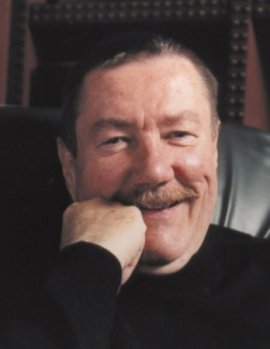


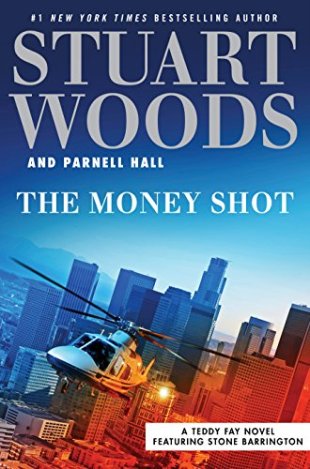
 For years Rebecca Miller (Maggie’s Plan, The Ballad of Jack and Rose) had been researching, compiling, filming interviews and taking home movies of her father, Arthur Miller. From this wealth of material, Ms. Miller has produced a fascinating look at the life and career of one of America’s greatest playwright/writers.
 Though best known for plays like Death of a Salesman, All My Sons, The Crucible and A View from The Bridge, Miller never stopped writing throughout his life. He wrote 25 plays, numerous essays, short stories, novels and an autobiography (Timebends).
 Between 2005 and 2015, nine direct for TV movies were made based on Robert B. Parker’s Jessie Stone novels. Recently, I have been re-watching many of them, seven so far to be exact. Parker was one of my favorite authors. He passed away in 2010.
 Robert B. Parker was best known for his Spenser novels. Spenser, a Boston based, ex-boxer, poetry reading, gourmet cook, wise-ass talking, sensitive guy and tough in a fight as they come P.I. A fictional decedent of Raymond Chandler’s Philip Marlowe and Hammett’s Sam Spade. Predictably, a TV series, Spenser for Hire followed starring a very dull Robert Urich. However, the problem was not just Urich; it was the scripts. Though the show has its admirers, on TV, Spenser lost a lot. He became just another vanilla filled version of every other TV detective seen before and after. Four made for TV films followed starring Joe Mantegna as our hero. They were an improvement on the series, though no one was going believe Mantegna was an ex-boxer.
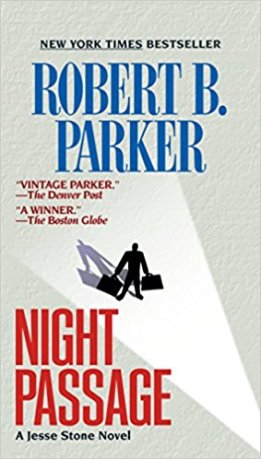 In 1997, Parker published his first Jesse Stone novel (Night Passage). Stone, an ex-L.A. detective, fired because of a drinking problem which began after his divorce from his wife, Jen. Jesse is hired as police chief of the fictional Massachusetts town of Paradise. The town council appointed him because they believed since he is damaged goods, they will be able to control him. Little did they know.
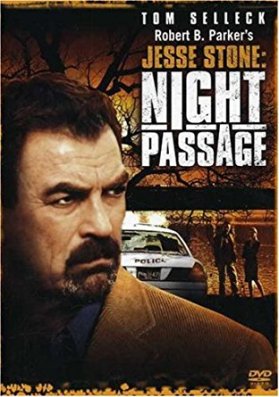 The first film (Night Passage) came out, as mentioned earlier, in 2005. Jesse is played by, with sharp assurance, by Tom Selleck. Jesse is damaged goods. He’s alcoholic, Johnny Walker Red his choice of drink. Moody, unwavering, iconoclastic and good at what he does. Throughout the books, and the films, Jesse is a man coming to terms with himself. Though his divorce haunts him, he does go out with other women but admits to all them he is not a good candidate for a permanent relationship.
 Cats and writers have a special bond. Their connection runs deep. Maybe it’s a meditative thing, maybe it’s inspirational or spiritual. Whatever it is, for many authors cats are an essential part of their lives.
  Officially, the tall season is a little more than a week away. However unofficially, Labor Day kicks off the beginning of fall in the arts. We read in newspapers and magazines about all the new films, television shows, theater, music and of course books that will be coming out over the next few months. Similar to what I did back here for
  One of my favorite crime writers is the late Donald E. Westlake. Westlake was awarded the title of Grand Master by The Mystery Writers of America, as well as a three-time Edgar winner. He wrote over 100 novels and numerous short stories and screenplays.

 Back in 1977, the author published a book called Enough. It consisted of two novellas, the longer of the two was called A Travesty, and the second, shorter story, was Orb. Enough may be one of the toughest of Westlake’s works to find a copy. I was fortunate enough a few years back to discover a copy at a local library. A Travesty is a dark, comic tale involving a sexually insatiable film critic, Carey Thorpe, who during a heated argument with one of his lovers accidentally kills her. Having seen too many movies, instead of calling the police, Thorpe decides to cover up his involvement in the transgression. Unfortunately, Thorpe’s lover was under surveillance by a blackmailing private investigator. Additionally, the investigating police detective takes a liking to our “‘hero,” and admires his amateur detective instincts. He’s also a frustrated screenwriter and would like Corey to take a look at what he wrote. Along the way, Carey is “forced” to commit a couple of more murders. Regrettably, for the film critic, his voracious appetite for sex does him in when he spurns the wrong woman.
 Let’s fast forward more than 30 years to 1999 and the premiere on TNT of a film called A Slight Case of Murder. It’s not to be confused with the 1938 Edward G Robinson film with the same title, but a made for TV film starring William H. Macy, Felicity Huffman, James Cromwell, and Adam Atkin. The film is based on A Travesty and adapted for the screen by Macy and director Steven Schachter. The duo faithfully captures the humorous essence of Westlake’s novella. The film critic’s name was changed in the movie from Corey to Terry, but much of the tale stays close to Westlake’s original work. It’s smart with plenty of visual and verbal nods to the noir films it’s sending up including Terry talking at times directly to the camera (in place of a voice-over). It’s filled with murders, sleazy characters and plenty of twists wrapped up in a funny script that film lovers, like myself, will especially love.

 I find inspiration can from anywhere and at any time. Many times it happens when you least expect it. For Life Lesson, one of twelve short stories in my new e-book, Devious Tales, it came from the above photograph I took back in 2015 in Vermont. My wife and I did a photographic road trip that began in Burlington. From there we made our way to Woodstock, St. Johnsbury and eventually back to Burlington; making multiple stops to photograph what caught our eye along the way. One day during this road trip we found ourselves on a dirt road. Instead of turning around, we decided to see where it would lead. There was actually little to see or photograph except for this old boarded house. I took a few photos from different angles and we went on our way.


 John Greco Author/Photographer