Over the weekend my wife and I went to Ruth Eckerd Hall in Clearwater and caught a performance of the musical Bullets Over Broadway. Based on Woody Allen’s 1997 hit film the musical is a bit of an oddity. It’s a rare Broadway musical that does not have an original score. Instead, the creators recycled classic period tunes by greats like Cole Porter, Sammy Cahn, Hoagy Carmichael and others adding fresh lyrics.
Considering Woody adapted his own screenplay, co-written by Douglas McGrath, the laughs in the stage version are not as plentiful as one would have anticipated. On the plus side, there are two excellent performances by Jemma Jane as Olive and Jeff Brooks as Cheech, respectively portrayed in the film by Jennifer Tilly and Chazz Pamintieri. Also, Susan Stroman’s original choreography was superbly recreated by Clara Cook.
Overall, Bullets Over Broadway does not reach the high levels of classic musical comedy that Mel Brooks brought in bringing his works, The Producers and Young Frankenstein, to the stage. Still, it remains an enjoyable evening of entertainment.
Though H. L. Menchen has been dead since 1956, many of his words are more relevant today in this nasty and despicable political climate than ever. For those unaware, Menchen was a journalist and critic. A man of ideas. In the 1960 film, Inherit the Wind, the character of newspaper journalist E.K. Hornbeck, portrayed by Gene Kelly, was based on Menchen.
The other day I came across a few of the writer’s famous quotes. It made me think about today’s political ugliness and the rise of mediocrity in many of the candidates. Vulgarity, encouraging violence, sexism, racism and other vile words should not be what comes out of the mouth of candidates for the Presidency of the United States. This kind of talk should in no way be part of the political process. We as a country are becoming a classless society. Then again, maybe we always were and this vile behavior is just bringing it to the surface and out into the open. It’s a sad comment on our society. I always hoped we were better than that.
Below are a few of his quotes…
“Nobody ever went broke underestimating the intelligence of the American public.”
“Democracy is the theory that the common people know what they want and deserve to get it good and hard.”
“Giving every man a vote has no more made men wise and free than Christianity has made them good.”
Back in the 1970’s, after my discharge from the Army, I enrolled in a class at the New York Institute of Photography. I got interested in photography after I purchased my first 35mm camera while stationed in Vietnam and later learned some darkroom development techniques while stationed in Germany. I bring this up only because the instructor during one session asked the class who they thought was a better photographer, Richard Avedon or Gordon Parks. Why he selected these two I don’t remember. Anyway, I made it known that I thought Parks was the better photographer. The instructor who I later classified as a typical know it all who liked to belittle people told me how I was wrong and that Avedon was the better of the two. The class laughed as he seemed to go on about my choice and belittling me in the process. I shrunk into a quiet embarrassed mode. I hated the class for the rest of the few weeks that I silently attended before dropping out.
I was naïve about photographers at the time and could not mount any sort of defense for my position. Today, I would say that the comparison was ridiculous to even make. The two men are masters. However, their work comes from two different directions and styles. As I learned more about my own style and taste in photography I can look back and see why I selected Parks. I’m not big on studio work. I prefer being outside and capturing those “decisive moments” in life as Henri Cartier-Bresson calls them, though my “moments” are more in nature than the streets of Paris .
I first became aware of Gordon Parks while in the Army. It was in the late 1960’s and his first feature film, The Learning Tree, played at the theater located on the base. It’s a charming and poignant semi-autobiographical film about a young black teenager growing up in rural Kansas. The film was based on Parks own novel. It’s certainly worth watching if and when the opportunity arises.
As I became more and more interested in photography I became familiar with Parks photographic work. As the first black staff photographer for Life magazine, his work was street wise, powerful and emotionally moving. I would later learn Gordon Parks was not just a photographer and writer but a true modern day renaissance man: Photographer, author, poet, filmmaker, and composer. He did it all and he did it all well.
Parks second feature film was his big break out film as a director. Shaft was a blaxploitation that commercially broke through the color barrier. With Richard Roundtree in the title role, Shaft was a super cool P.I. A modern day Bogart. Isaac Hayes in his hit title song says it all.
Who is the man that would risk his neck
For his brother man?
Shaft, can you dig it?
Who’s the cat that won’t cop out
When there’s danger all about?
Shaft, right on
Parks made two other films in the coming years, Shaft’s Big Score and The Super Cops. Then in 1976 came Leadbelly… Huddie Ledbetter, aka Leadbelly, aka Lead Belly was one of America’s great folk/blues singers. His influence on artists such as Woody Guthrie, Pete Seeger, Creedence Clearwater Revival, Bob Dylan, Johnny Rivers, Tom Waits, Ry Cooder, Elvis Presley and so many others has been well documented in their recordings. Huddie was inducted into the Rock and Rock Hall of Fame back in 1988.
Park’s film paints an evocative portrait filled with images of a segregated South that kept many down and out folks filled with hardship and suffering as well as hope and dreams. Still, their lives were filled with music – the Blues. As portrayed by Roger Mosely, Huddie was a restless soul filled with hope and dreams. He wanted to hit the road, and as a young man he did, performing in whorehouses and other venues. Anywhere they would let him sing. However, his road was filled with a series of rough ‘bumps’ along the way including long stretches in prison. What never stopped was his love of music playing gospel, folk and those blues.
From what I have read, Park’s evocative film come across as a fairly accurate portrait of the musician’s rocky road in life. In real life Huddie killed at least two men and spent a lot of time in Texas prisons working on the chain gang. In the film we see two separate incidents where Huddie ends up killing another man. One is unintentional, the second was in self-defense. As Roger Ebert writes in his original review, “His crimes are matched by the crime of the chain-gang system, designed to break his spirit. It fails.”
One of the finest parts of the film comes early on when Huddie meets Blind Lemon Jefferson. Lemon, another soon to be blues legend, is superbly played by Art Evans (Die Hard 2, A Soldier’s Story and many, many TV shows). The two bluesmen team up for a while performing on the road (in real life it was about two years). In one scene during this period they sing for white people at a dance party. It turns ugly when the evening begins to get late and Huddie decides to pack it in. However, one of the white folks wants him to continue and a fight ensues with Huddie getting badly beaten. It always seems even when Huddie wasn’t looking for trouble, it found him.
Years go by. The chain gang, by design, breaks men’s souls. However, Huddie’s self-respect and spirit remains in tack. He eventually get out of prison. Legend and the film claim that after performing, playing his 12 string guitar and singing, for the Governor who is so taken by Huddie’s simple “darkie” performance that he tells the prisoner when his term is up as Governor, one of the last things he will do is give Huddie a pardon. Of course, this sounds like bull, but surprising enough, though some time has passed, the Governor kept his word and the blues singer gets out of prison. In real life Huddie was released early due to his good behavior. Also with the Great Depression came a series of budget cuts and Huddie’s good record helped him out as well with the selection of prisoner’s to be released in order to cut expenses.
The film is told in flashback. During his last stretch on the chain gang Huddie is visited by musicologist John Lomax who has been recording and archiving rural folksinger’s for the Library of Congress. By now, Huddie is older and gray haired. As the recordings begin he looks back on his life. In real life Lomax visited and recorded Ledbetter on two separate occasions. First in 1933 and again one year later in 1934. It was a month or so after this second visit that Huddie was pardoned.
LEADBELLY, I.V.
Fact or fiction, Leadbelly is a good film that is rarely seen, though it does show up sometimes in February during Black History Month. The folksinger is best known for songs like Goodnight, Irene, The Midnight Special, Rock Island Line along with many others. After his prison time he performed around the country a lot and appeared as a regular on the CBS radio show Back Where I Come From which was produced and hosted by Alan Lomax (John’s son). Future film director and Alan’s close friend, Nicholas Ray, was also a producer and writer of the show at the time. Leadbelly’s last performance was at Carnegie Hall in New York City. He died in New York on December 6th 1949.
The first time I watched Leadbelly was way back in ’76 at the time of its release. It was at the Loew’s State in Times Square. The showing I went to had a couple of live special guests, folksingers Sonny Terry and Brownie McGhee who met Leadbelly after he became a regular in the New York City folk scene. They reminiscence about their friend and sang some of his best known songs. It was a unique chance to see these two artists and learn a little more about their friend and a true legend.
Is saying no rude? As I have gotten older and realize more and more how quickly time rushes by, and how little time remains, I am beginning to think that the greatest time saver is saying the word no. These two little letters can add up to minutes, hours and even days in one’s life that certainly can be put to more creative use. Even if it means wasting time. Paraphrasing John Lennon “time you enjoy wasting is not wasted.” Sometimes you need to rev up your creative juices by wasting time of your own choosing.
In life though, we are taught to be polite and saying no to invitations from family, friend, or professional acquaintances has always been viewed as just not nice. “Sorry, I rather be home writing, painting, photographing or doing any other creative endeavor than waste an afternoon playing golf or an evening out drinking. It sounds rude but in reality it is more a selfish behavior, and frankly I am not sure there is anything wrong with that. As long as you are being selfish for a good reason.
Being creative is not a nine to five job. It happens whenever ideas or inspiration strike. There is no time table on the creative clock. You take your lead from the inspiration and ideas going on inside your brain as they occur. From there you create your own life’s course. Being creative makes you see things in life that others just pass by as mundane. As an artist your eyes pick up on things that others don’t see. Through your art, you express a vision, and ideas, in a unique way. It can happen at any time. You never know when it’s going to strike. Time is always a precious element in your creative process. You need to use it as you would any other tool on your palette.
Last week my wife and I did an overnight trip to Lakeland. What’s in Lakeland, you ask? For us it’s the Circle B Bar Reserve, a 1,267 acre refuge filled with a variety of wildlife. A haven for photographer’s. The reserve, now owned by Polk county, was previously a privately owned cattle ranch. According to a pamphlet I picked up upon our arrival the property was originally “a wet area connected to Lake Hancock.” This was way back in 1927. During the next 70 years the wetlands was drained to make it more conducive to cattle ranching. In 2000, Polk county acquired the property and began to convert the land back to its natural landscape.
One of the many birds we came across during our time there was the Anhinga. It’s a fairly large bird, about 35 inches in height, that is mainly found in South America, Central America and the Southern Coastal United States. Many times you will find them along the coastal waters with their wings spread out drying them in the sun. Like Cormorants, which they resemble, Anhinga’s are water birds, however, lacking oil glands they are not waterproof. Subsequently, after swimming in the water they need to dry off their wings otherwise they would not be able to fly.
On this most recent trip of ours we found one particular Anhinga ready for lunch. He had a fish already in his long beak when we first spotted him. What was fascinating was how he began to literally beat the fish to death by smashing it against a tree branch. We arrived just in time to watch and photograph the ritual. It was captivating to watch, though sad and painful for the fish. I wanted to both photograph and shoot a video of the activity but naturally could only do one. Below are some of the photos I took.
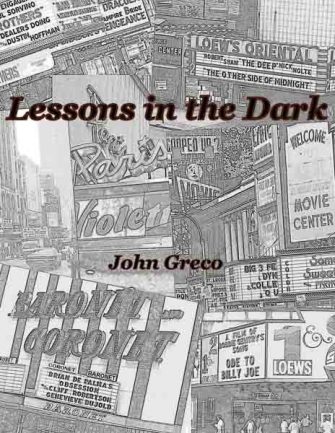
My latest e-book, Lessons in the Dark, is now available exclusively at Amazon. com. Why Lessons? Simply because watching movies for me has always been more than just entertainment. It was art, history and it was education. I have found many classic (old) films to still be relevant to our lives today. For example, my father always talked about how tough it was growing up during The Great Depression. However, it was not until I watched films like Wild Boys of the Road and The Grapes of Wrath that I truly began to understand what it was like. I also came to see how today many of these old films have remained relevant to our society and can teach us not to repeat our mistakes.
In this book I have compiled a series of essays on films that reflect one or more of these themes. I hope you enjoy. Below is a link to Amazon.
Before Bernie Sanders there was Bernie Rhodenbarr, Lawrence Block’s expert thief and used bookstore owner. While Bern is good at his chosen profession, unfortunate situations always seem to occur, like an unexpected dead body showing up at the wrong time which forces our anti-hero to have to investigate the murder in order to clear his name.
I have been a admirer of Lawrence Block’s work for years now. He first came to my attention one day, during a lunch break from work, browsing the bookshelves in one of the local libraries. It was one of the his Bernie/Burglar books that caught my attention.
Bernie first appeared in 1977 with Burglars Can’t Be Choosers. With his second outing, the series settled in a series of titles beginning with The Burglar Who… With the third book in the series, The Burglar Who Liked to Quote Kipling, published in 1979, Bernie acquired a bookstore in Greenwich Village. Eventually, Bernie got a cat he named Raffles, a gift from his best friend and Village soulmate Carolyn Kaiser. After all, what second hand bookstore doesn’t need a cat?
In all, there are eleven books in the series plus a few short stories. There is not a bad one in the bunch. The last one, The Burglar Who Counted Spoons, was published in 2013 after a nine year hiatus. The books are chock full of sharp witty dialogue and wonderful characters.
If you are familiar with Lawrence Block, you know that The Burglar books are just a small piece of his complete output of work. Block’s other great character is Matt Scudder, an ex-cop and recovering alcoholic who does “favors” for friends and clients. Scudder quit the force after accidently causing the death of a young girl. His life soon fell apart; he left his family and moved into an old hotel in New York’s Hell’s Kitchen area where he earned money working as a unlicensed P.I. doing those “favors” as he called them. The Scudder books, as you may have guessed, are much darker but just as brilliantly written.
In 2014, an excellent adaptation was made of his novel, A Walk Among the Tombstones, with Liam Neeson as Scudder. Until this film, Block had not had much luck with his work being transferred to the screen. From Nightmare Honeymoonto Burglar, one was worst than the other. In the latter film, Bernie was transformed into Bernice and portrayed by Whoopi Goldberg. Nothing against Ms. Goldberg, but who the hell thought this was a good idea?
From what I have read Block has not expressed much interest in doing anymore Bernie books. Which for me and many fans is sad. Still, we can hope.
Bob Gruen is one of rock & roll’s finest photographers. Over the years, he has photographed many of the greats including The Rolling Stones, Bob Dylan, Led Zeppelin, Kiss, The New York Dolls and most famously John Lennon. Gruen met Lennon in 1971. They became both friends and business associates with Bob becoming the former Beatles personal chronicler of his New York years. Many of Lennon’s most iconic images from this period including the rooftop photos with John wearing a New York City t-shirt and his holding up a peace sign while standing in front of the Statue of Liberty were taken by Bob Gruen.
In 2005, Gruen published an excellent book, John Lennon: The New York Years, collecting the best of his Lennon photographs. I highly recommend any Lennon admirer adding it to their bookshelf.
Below are a few photos from the 1974 rooftop session. The first photo is the now iconic New York City t-shirt shot. The second photo is an interesting behind the scene polaroid of Gruen photographing Lennon during that now famous session. Finally, one of Gruen’s contact sheets from the shoot.
If you are a photographer like me or a Lennon admirer, there is a very good documentary on Bob Gruen that covers his entire career. It called Rock and Roll Exposed: The Photography of Bob Gruen. Unfortunately, it’s not on DVD, however, it does show up on cable occasionally.
As John Lennon once said, “You shoulda been there.”
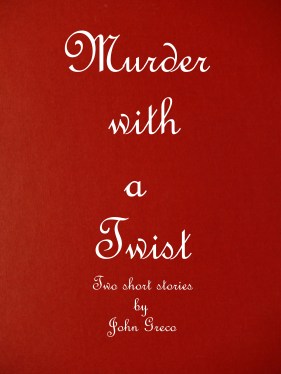
Two short stories (Salt Free Diet and The Green Light) of murder and revenge are now available at Amazon.com for only 99 cents. Click on the link below.


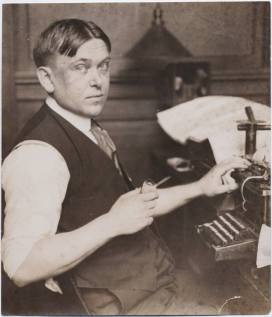 Though H. L. Menchen has been dead since 1956, many of his words are more relevant today in this nasty and despicable political climate than ever. For those unaware, Menchen was a journalist and critic. A man of ideas. In the 1960 film, Inherit the Wind, the character of newspaper journalist E.K. Hornbeck, portrayed by Gene Kelly, was based on Menchen.
 Back in the 1970’s, after my discharge from the Army, I enrolled in a class at the New York Institute of Photography. I got interested in photography after I purchased my first 35mm camera while stationed in Vietnam and later learned some darkroom development techniques while stationed in Germany. I bring this up only because the instructor during one session asked the class who they thought was a better photographer, Richard Avedon or Gordon Parks. Why he selected these two I don’t remember. Anyway, I made it known that I thought Parks was the better photographer. The instructor who I later classified as a typical know it all who liked to belittle people told me how I was wrong and that Avedon was the better of the two. The class laughed as he seemed to go on about my choice and belittling me in the process. I shrunk into a quiet embarrassed mode. I hated the class for the rest of the few weeks that I silently attended before dropping out.
 Huddie Ledbetter, aka Leadbelly, aka Lead Belly was one of America’s great folk/blues singers. His influence on artists such as Woody Guthrie, Pete Seeger, Creedence Clearwater Revival, Bob Dylan, Johnny Rivers, Tom Waits, Ry Cooder, Elvis Presley and so many others has been well documented in their recordings. Huddie was inducted into the Rock and Rock Hall of Fame back in 1988.
 One of the finest parts of the film comes early on when Huddie meets Blind Lemon Jefferson. Lemon, another soon to be blues legend, is superbly played by Art Evans (Die Hard 2, A Soldier’s Story and many, many TV shows). The two bluesmen team up for a while performing on the road (in real life it was about two years). In one scene during this period they sing for white people at a dance party. It turns ugly when the evening begins to get late and Huddie decides to pack it in. However, one of the white folks wants him to continue and a fight ensues with Huddie getting badly beaten. It always seems even when Huddie wasn’t looking for trouble, it found him.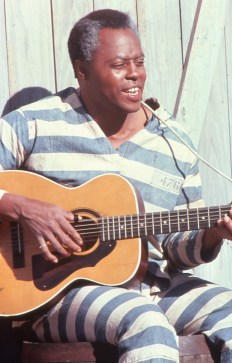
 The first time I watched Leadbelly was way back in ’76 at the time of its release. It was at the Loew’s State in Times Square. The showing I went to had a couple of live special guests, folksingers Sonny Terry and Brownie McGhee who met Leadbelly after he became a regular in the New York City folk scene. They reminiscence about their friend and sang some of his best known songs. It was a unique chance to see these two artists and learn a little more about their friend and a true legend.
 One of the many birds we came across during our time there was the Anhinga. It’s a fairly large bird, about 35 inches in height, that is mainly found in South America, Central America and the Southern Coastal United States. Many times you will find them along the coastal waters with their wings spread out drying them in the sun. Like Cormorants, which they resemble, Anhinga’s are water birds, however, lacking oil glands they are not waterproof. Subsequently, after swimming in the water they need to dry off their wings otherwise they would not be able to fly.


 Bernie first appeared in 1977 with Burglars Can’t Be Choosers. With his second outing, the series settled in a series of titles beginning with The Burglar Who… With the third book in the series, The Burglar Who Liked to Quote Kipling, published in 1979, Bernie acquired a bookstore in Greenwich Village. Eventually, Bernie got a cat he named Raffles, a gift from his best friend and Village soulmate Carolyn Kaiser. After all, what second hand bookstore doesn’t need a cat?
 In 2014, an excellent adaptation was made of his novel, A Walk Among the Tombstones, with Liam Neeson as Scudder. Until this film, Block had not had much luck with his work being transferred to the screen. From Nightmare Honeymoon to Burglar, one was worst than the other. In the latter film, Bernie was transformed into Bernice and portrayed by Whoopi Goldberg. Nothing against Ms. Goldberg, but who the hell thought this was a good idea?


 John Greco Author/Photographer