

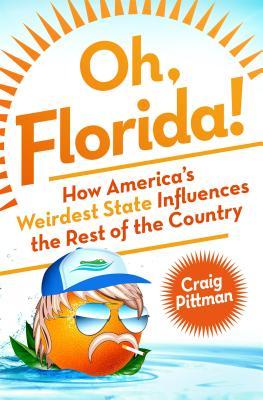
A must read for anyone thinking of moving to Florida. You just might have second thoughts! Author Craig Pittman (Tampa Bay Times) writes in a breezy informative style that is as engaging as it is funny. The sad, or scary part, is everything he writes about is true. It all happened. No exaggeration needed. From teachers who have had sex with their students, remember Debra Lefave, a sexy blonde bombshell, being the most prominent to crazies like a woman who thought riding a Manatee, an endangered species, as if it were a surf board would be a sane thing to do. Of course the state is loaded with crazy politicians. Now most states have a weird politician or two, but Florida seems to be growing them like oranges including the only Mayor to ever be over thrown in a military coup. We also meet Old Sparky, Florida’s famed electric chair and a long, long, long history of land swindles (swamp land for sale!). And let’s not forget the ‘stand your ground’ law. That all said, Pittman does not just focus on the crazies and the weird. While the state has more than its share of both some good and smart people have emerged and the author gives them their due.
The book is entertaining, informative and a warning to anyone contemplating moving to the Sunshine State.

Grace Kelly, James Stewart and Alfred Hitchcock watch as L.A. Times press photographer Phil Bath goes over some of the photography equipment used in the 1954 classic, REAR WINDOW. Stewart portrayed a magazine photographer injured during a photo shoot. Laid up in his Greenwich Village apartment he spends his days watching his neighbors through his window. Then one day he witnesses a murder…or did he?
I wrote about this film twice on my film blog, Twenty Four Frames. The links are below.
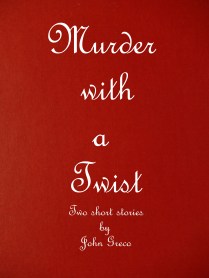 Author Carol Balawyder left a wonderful five star review of my book, Murder with a Twist on Amazon.
“The two short crime stories in this book read like hardboiled fiction. Like any good short story both stories in Murder with a Twist are tightly written and we jump into the action right away. Both stories were written from a woman’s point of view and whether in the first person view point (Salt Free) or the third person point of view (The Green Light) John Greco accurately portrayed the mindset of, in one case, a woman cheated by her husband and in the other a women using sex to get what she wants. I found the twists at the end of both stories to be surprising and satisfying. I’m hoping that these two stories are the beginning of a larger collection of stories by this author.” Carol Balawyder
Ms. Balawyder is the author of the Getting to Mr. Right series.
You can read more about Ms. Balawyder and her books at her website. Just click on the link below.
https://carolbalawyder.com/blog/
You can find my books at the link below.
https://www.amazon.com/John-Greco/e/B00K0RCADI/ref=sr_ntt_srch_lnk_6?qid=1452516005&sr=1-6

Rick Nelson and his band that included guitar legend James Burton (right)
Rick Nelson has always been underrated as a rock and roll singer. He was both helped and hindered by his show business family. Rick was practically raised in the public eye as the youngest and cutest of the Nelsons. The 1950’s TV show, The Adventures of Ozzie and Harriet was a mainstay in many American homes. It ran for 14 seasons from 1952 thru 1966. Prior to this, it was on the radio where it began in 1944.(1) When he first began to sing on the show, Rick was not taken seriously because of his show business background. However, he soon became one of the best-selling artists of the 1950’s.
His father Ozzie had a strong influence on Rick and old Dad hated rock and roll. In the early 1960’s he would steer Rick away from the rockabilly tunes he favored in his early records (It’s Late, Believe What You Say and My Bucket’s Got A Hole in It) toward more standard pop oriented tunes like For You and The Very Thought of You. These songs were old standards from the big band era that Ozzie knew well and favored. The songs were produced with a bit of a pop beat for the teen audiences of the day. With these songs and his cute teen idol looks Rick soon got lumped into the Frankie Avalon, Bobby Rydell, Fabian, Bobby Darin school of boy next door teen idols moving away from the threatening Elvis, Chuck Berry, Jerry Lee Lewis, Little Richard and Carl Perkins wild boys of rock and roll.
Parents of lily white teenage girls did not like those wild rockers who sang about a Whole Lotta Shakin’ Going On or Good Golly Miss Molly who knew how to ball. They preferred their daughters listen to Frankie and Bobby or to virginal Pat Boone who gave us a horrible, just horrible, white bread cover versions of song like Tutti Frutti and Ain’t That a Shame.
Pat Boone’s pale “clean” version of Tutti Frutti. Notice the change in the lyrics.
Little Richard’s original hard rockin’ version.
Unlike Boone, Fabian and the others, Rick was a true rock and roller. He was an important component in the acceptance of rock and roll during those early days. Parents hated their kids listening to Little Richard, Jerry Lee, Elvis and the other wild men. Suddenly, there was Little Ricky, with a guitar strapped around his shoulder, right there in their living room on their black and white TV screen. Little Ricky! There he was singing, Believe What You Say, with the amazing rock guitarist pioneer James Burton on lead guitar as part of his band.(2) Hey, maybe rock and roll wasn’t so bad. This wasn’t one of those greasy, long haired boys singing, it was little Ricky. Cute little Ricky who always got into some sort of adorable trouble every week. Let’s face it, if Oz and Harriet liked it, Most of America liked it.
Rick Nelson brought rock and roll into the homes of all Americans on a weekly basis. He made it more tolerable for parents to accept. That was something no other rock and roller of the day could do.
Notes:
(1) Rick, and his older brother David, started on the show in 1949. Prior their joining the cast various child actors portrayed the boys. David was 12 and Rick was 8 at the time.
(2) James Burton would go on in the late 1960’s to become a main stay in Elvis’s TCB band. Burton ranked number 19 in Rolling Stone magazines list of 100 Greatest Guitar Players.
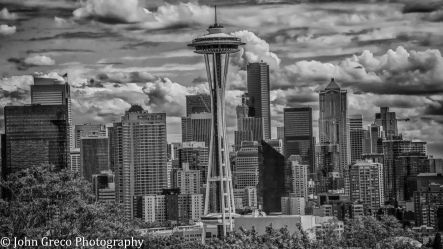
I recently returned from a one week trip to Seattle and the nearby San Juan Islands in Washington State. It’s a beautiful part of the country and Seattle itself comes across as sophisticated and hip. My wife and I spent most of our time in the San Juan Islands, the town of Friday Harbor to be a bit more specific.
Our main purpose for the trip though was to photograph the Orca whales that roam the nearby waters. For three days we were on a small boat hunting, photographically, for these gentle giants. I thought I would share some of the final results.
All photographs are available as prints, t-shirts, greeting cards, tote bags and more at the link below. Please feel free to just browse.
http://1-john-greco.pixels.com/index.html






Success breaths imitation and the success in 1958 of the Blake Edwards created TV series Peter Gunn did just that with Johnny Staccato. Peter Gunn starred Craig Stevens as the sharply dressed detective whose favorite hang-out was a riverfront jazz club called Mother’s (Mother was played by veteran character actress Hope Emerson). That show remains most memorable for its Henry Mancini written Peter Gunn Theme with its driving beat that’s part jazz and part early rock and roll. Gunn, as played by Craig Stevens, was elegant for a private eye. California laid back. He had expensive taste and a sophisticated style. This guy didn’t walk along those mean dark streets we associate with P.I’s like Spade and Marlowe.
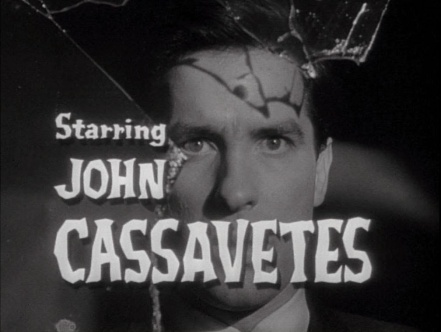 During the fall TV season of 1959 NBC premiered Johnny Staccato. It starred John Cassavetes as a jazz musician who supplemented his income by playing private eye. Like Gunn, Staccato’s favorite hangout was a jazz club. For Staccato it was Waldo’s, run by character actor Eduardo Ciannelli, where he played piano. However, there were differences in the two shows. Staccato’s beat is New York. He had the city’s edginess. Waldo’s is set in Greenwich Village as oppose to a nameless west coast city in Peter Gunn. Staccato is closer in style to classic noir like detectives like the aforementioned Sam Spade and Philip Marlowe. Staccato walked those mean streets. Jazz plays a more important part in the show thanks to the Pete Candoli Combo. In Peter Gunn, Craig Stevens brought a sense of sophisticated class to the private eye genre while Cassavetes brought his street tough persona as well as a jazzy feel.
Until the other day, I have not seen an episode of Johnny Staccato in quite a few years. Then while doing a little channel surfing on TV, I came across an episode that was going to be broadcast during the middle of the night. With Gena Rowlands listed as the guest star, I set the DVR.
The episode was called, Fly, Baby, Fly. Like Peter Gunn, Johnny Staccato has his charm that goes over well with the ladies. In this episode he quickly starts talking to this beautiful blonde (Ingrid Goulde) he meets at Waldo’s when this big lug comes over and informs Staccato he’s muscling in on his dame. It quickly evolves into a fist fight outside the club with Johnny punching out the oversized gorilla. The guy turns out to millionaire Guy Fletcher (Dort Clark) who likes the way Johnny can handle himself. Though they just met, he has a deal in the works that needs a guy just like Johnny. He’s willing to pay one thousand dollars and claims it all above board.
Johnny’s a bit skeptical and says he’ll have to think about it. He doesn’t for too long and agrees to meet Fletcher at his office. The deal involves transporting a briefcase filled with rare stones to California. Apparently, as he tell Johnny, there are people out there who are after the stones and do not want to see this deal completed. He can’t carry the package himself because his face is too well known to everyone involved. He also tells Johnny not to open the case until they are flying over Arizona. Fletcher’s secretary has his ticket. Johnny, steps out of Fletcher’s office for a moment to retrieve it. While Johnny is out, Fletcher quickly switches briefcases. The new briefcase contains an explosive device set to go off when the suitcase is opened.
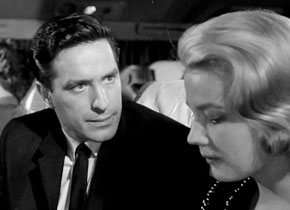 On board the aircraft, Johnny meets Nina Van Ness (Gena Rowlands), a singer. Johnny manages to sit next to her. In conversation that seems to move along to a cozy point at a rapid pace they discover both are in the music business. She it turns out is a well-known singer. Unfortunately, it also comes out that Nina is Fletcher’s wife and she is on her way to Las Vegas for a quickie divorce. When she finds out Johnny is working for her husband, she wants nothing to do with him.
For Johnny, his detective alarm suddenly goes off. There’s too much coincidence. He is on the same flight, which Fletcher arranged, as Nina. Fletcher gives him this briefcase filled with supposedly rare stones and Fletcher, as Nina mentions, would have no problem killing her. Johnny’s suspicion grows and he notifies the aircraft staff that there may be a bomb on the plane. They need to make an emergency landing.
This particular episode is filled with some intense Hitchcockian style suspense. We the audience know what’s going on, there’s a bomb on board, but Johnny who is telling the story in narration, does not know as much as he think he knows. What also struck me was how relevant the idea, from a show more than fifty years old, of a terrorist bomb on board an aircraft was. The threat that a maniac, filled with so much hatred, was willing to down an entire flight filled with people just to get rid of his wife. We live in a world where, while we cannot live our lives frozen in fear, today we are all well aware of the terrorist attacks that plague the world.
Additionally, it’s interesting to see in this show how airline travel has changed over the years. Smoking during a flight the most obvious. There is also the luggage compartment above that has no doors to secure any packages stored. A flight attendance, all young attractive women, tells Staccato he needs to hold the briefcase in his lap during takeoff. As we all know today that would be a no-no. This little TV detective show reflects how times have changed and gives us a brief history lesson on the way we were.
Cassavetes has always been an intense actor and he style generally works in this New York based series. Some of the episodes remain excellent, others are predictable or uneven. However, they are never dull and all have a noirish feel that remains interesting as well as a jazzy soundtrack by the great Elmer Bernstein.
Once again photography proves itself to be one of the most powerful tools to express a decisive moment in our history. With the click of a shutter, Jonathan Bachman’s photo, taken during a recent Black Lives Matter protest in Baton Rouge, says more in one image than a 2,000 word article. Bachman’s photo has become an iconic document on and about our society.

Photo by Jonathan Bachman
Another photograph that struck our collective conscience was taken in 1965 during the Vietnam War. It was a pivotal time in America’s history and my own. The iconic photo below shows one protestor placing a flower inside a National Guardsman’s rifle barrel. In this one image we see the divisiveness of the times and a small plea for peace.

Photo: Washington Post/Getty Images
The 1989 student protests in Beijing’s Tiananmen Square was an attempt for Democratic reform in China. The movement failed when the Chinese government unleased it’s military including tanks against its own people. Out of it came Charles Cole’s historic photograph of a lone man standing defiantly in front of Chinese tanks. The photograph made the front pages of just about every newspaper of the day. The man’s identity and his fate have never been fully known. The link below will connect you to a documentary called “The Tank Man.” It’s about what happened to the man in the photo and how China has erased this period from its history books.
http://www.pbs.org/wgbh/pages/frontline/tankman/

Photo by Charles Cole.
Photography has documented historic moments for a long time. Photographers like Lewis Hine and W. Eugene Smith spent their lives recording and exposing injustice. Hine was best known for his powerful works of social reform particularly focusing on child labor.

Photo by Lewis Hine.
W. Eugene Smith is remembered for his powerful photo-essay called Minamata. A shocking look at a small Japanese fishing village whose residents were severely poisoned and suffered from physical disfigurement due to mercury poisoning from a nearby chemical company. During his time investigating and photographing, Smith was severely beaten by goons hired by the chemical company.

Photo by W. Eugene Smith
Photography as a powerful tool of change and recording important moments in life goes back to almost the beginning of the art. Matthew Brady is known best at a recorder of the Civil War and as President Lincoln’s photographer. Brady’s images of the battlefield brought home the horror and despair of the most expensive war in human cost.
 Photo by Matthew Brady
Many of my photographs are available for sale as Wall Art (prints, canvas, etc.), T-Shirts (Men’s, women’s and baby sizes), Greeting Cards, Tote Bags, Throw Pillows, Cellphone Cases, Beach Towels and much more! You can check it all out by clicking on the link below. Hundreds of photos are available.
http://1-john-greco.pixels.com/index.html




 Michael Herr passed away on Thursday at the age of 76. His book, Dispatches was and remains one of the premiere books examining what it was like to be a soldier in Vietnam. Herr was a war correspondent with the eyes and ears of a poet. In late 1967, Herr, working at Esquire, convinced his employers to send him on assignment to Vietnam. This was right before one of the deadliest and bloodiest battles of the war, the Battle of Khe Sanh. It was almost ten years until the book was published in 1977. After its publication, Herr worked on two of the most important films about the Vietnam war. He contributed to the narration on Francis Ford Coppola’s epic Apocalypse Now (1979) and co-wrote the screenplay, with Stanley Kubrick and Gustav Hasford, on Full Metal Jacket. The film was based on Hasford’s novel, The Short-Timers. Herr had met Stanley Kubrick in 1980 during an advance screening of The Shining. They became friends which evolved into a creative and artistic relationship.

Below is a paragraph from Dispatches.
“You could be in the most protected space in Vietnam and still know that your safety was provisional, that early death, blindness, loss of legs, arms or balls, major and lasting disfigurement — the whole rotten deal — could come in on the freaky-fluky as easily as in the so-called expected ways.”
One writer's experiences, and battles with words
INSPIRING WRITERS WORLDWIDE
The Only Crime Is Getting Caught
An Eclectic Collection of Pop Culture
A Home for Writers and Readers
Deep. Dark. Droll.
Burgers, Books, Music, Movies, Offbeat Adventures & Pop Culture!
Movie Reviews by Movie Critic Joanna Langfield.
I was born not knowing and have only little time to change that here and there
Horror/Suspense writer, Reviewer. Grower!
A Writer's Blog That's Not.
Blog posts from writers of authentic crime fiction.
Maria Konnel -- Children's & Young Adult Fantasy Author - Book Illustrator
beautiful thinking
 John Greco Author/Photographer