The classic pre-code prison drama, “I Am A Fugitive From A Chain Gang” will be showing on TCM tomorrow morning at 6:15AM eastern time. Be sure to set your DVR.
You can read more about it in my e-book “Lessons in the Dark.” Available on Amazon.com. Click on the link below.
One of the most iconic images of James Dean shows the actor walking right down the middle of the Times Square crossroads. It’s raining. He’s wearing an overcoat, his collar is turned up, he’s hunched over and a cigarette is dangling from his mouth. The photograph was taken by Dennis Stock in 1955. At the time, both Dean and Stock were still relatively unknown in the respective careers. Dean would soon explode onto the screen in East of Eden and Rebel Without a Cause. As quickly as he became a star, it would be extinguished after his fatal car crash in September 1955. The star died, but an iconic legend was born.
Photo by Dennis Stock
I accidently found this film while browsing through a local library earlier this week. I was unfamiliar with it, in truth, I never heard of it before. What caught my eye was the DVD’s cover image that loosely reflects the famous shot of James Dean walking down the middle of Times Square. Only in this version there is another guy with him with a 35mm camera around his neck, and unlike the more casually dressed Dean, wears a conservative white shirt and tie. Life, (the title as you will learn has a double meaning) it turned out was the story of the unusual short friendship between James Dean and photographer Dennis Stock. I had to watch this!
For a short period in 1954-55, Dennis Stock would photograph James Dean in Hollywood, New York and in Dean’s hometown in Indiana. In Life, directed by Anton Corbijn, we follow this short lived friendship between a still unknown actor and a ambitious photographer, still looking for his own big break. Stock works for the Magnum Agency and convinces his boss that this young nobody of an actor is going to be the next big thing as soon as his first film, East of Eden, is released. Stock wants his bosses to convince Life magazine to do the story.
Corbijn is definitely suitable for the subject matter considering his previous life as a rock photographer. Dean is played nicely by Dane DeHann who more through mannerisms and speech than through physical looks captures Dean’s essence. Stock is played by Robert Pattinson. He’s a bit quirky and his personal life is a mess. Married young, he’s divorced with a young boy who he hardly sees. When he does see the boy, it’s uncomfortable. While Stock works for Magnum, his career is not going in the direction he wants. He wants to be an artist and have an exhibit instead of photographing the latest movie premiere.
Each in their own way are fish out of water. They meet at a party in Hollywood given by director Nicholas Ray who is considering Dean for his new film Rebel Without a Cause. Stock is there on one of his routine assignments. They begin an uneasy friendship. Stock comes to see Dean as someone special and on the rise. He convinces his bosses at Magnum, Dean would make a great subject for a photo essay for Life magazine. The assignment is approved, but Dean turns out to be a relentlessly elusive subject to tie down for a shoot. During the course of their short friendship, Stock followed Dean from Hollywood to New York and even back to his hometown farm in Indiana. In the course of this short time, Dennis Stock creates a series of portraits of the artist as a young rebel. Many of the photos shot during this period turned out to be some of most intimate moments of Dean we ever get to see, especially the images of his life back in Indiana.
Dane DeHaan and Robert Pattinson as James Dean and Dennis Stock
Like James Dean, Corbijn’s film is all about mood and not action. To some it may seem like it meanders, but I felt that it fits the zigzagging mood of the two lead characters. Dean wants to be a star yet he fights the Hollywood system. Stock wants to be a photographic artist, but seems tied down by money worries and opportunity. The two men eventually go their own ways when Dean heads back to Hollywood to begin filming Rebel Without a Cause and later Giant, both released posthumously and kicking off Dean’s legendary status.
Ben Kingsley plays a thug like Jack Warner and almost steals the film from its two lead actors. In one scene, Warner, after Dean ridiculed a Warner Brothers film during an interview, warns the young actor he better stay in line or he will be quickly dumped.
Ben Kingsley as Jack Warner impatiently waiting for James Dean to show up at the New York premiere of East of Eden.
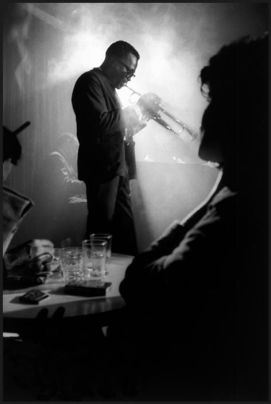
After Dean went back to Hollywood, Dennis Stock remained in New York and focused his work on the city’s Jazz Scene. Over the next few years, he photographed artists like Billie Holiday, Louis Armstrong, Gene Krupa and Miles Davis among others. Most were not performance photos, but more personal and atmospheric moments that he captured. Stock liked to stay quietly in the background capturing those private moments when his subjects were unguarded. The best of his Jazz work were compiled into a book called, Jazz Street, published in 1962. Over the course of his long career, Dennis Stock turned his camera on many subjects including the youth revolution of the late 60’s including hippie communes in New Mexico and California. Later in life he did a lot of nature and landscape photography. One thing that always remained consistent was that Dennis Stock always photographed what he wanted. At the University of Texas where he once addressed a roomful of photojournalism students Stock said, “I’ve never taken an assignment, I’ve always photographed what I wanted to be photographing, and then worried about selling the pictures or doing something with them afterwards. I’ve always shot for myself, and when you’re shooting what you’re interested in shooting, you’re always going to be happy.”
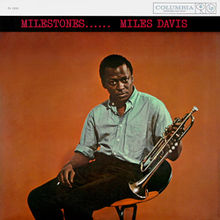
Miles Davis by Dennis Stock
Dennis Stock was born in 1928. A native New Yorker, he was raised in The Bronx and grew up during the Great Depression. At the age of 17, he left home and joined the Navy. After his discharge, Stock apprenticed under photographer Gjon Mili between the years 1947 and 1951. He also worked closely with W. Eugene Smith. Stock first gained recognition after he was one of ten winners in a Life magazine photography contest. Some of his fellow winners at the time included Ruth Orkin, Robert Frank and Elliot Erwitt. Heady company. This was soon followed by a position with Magnum. During his early Hollywood days, Stock photographed stars like Audrey Hepburn, Marlon Brando, Marilyn Monroe, John Wayne and many others. Like his photos of James Dean, the photos were generally intimate, behind the scenes and unguarded moments. In 1955, his James Dean photo essay was published in Life just a short period before the actor’s death.
Over the years, there were more books published, exhibits, lectures and photographs. Always photographs. Dennis Stock died in 2010 at the age of 81. As the film, Life, suggest, Stock’s personal life was messy. He was married several times; his last wife was author Susan Richards. At the time of his death, he had three children, a grandson and five great grandchildren.
A posthumously released documentary on Stock called, Beyond Iconic: Photographer Dennis Stock made the film festival circuit in 2011. In was directed by Hanna Sawka Hamaguchi and narrated by Stock prior to his death. The film seems to be sadly only available to academic institutions and resources at exorbitant prices.
Sources:
Sharpio, T. Rees, Dennis Stock, 81; Magnum Photographer Shot Iconic Moments, Washington Post, Jan. 14, 2010
Dunlap, David W. Dennis Stock, Photographer of Intimate Portraits, Dies at 81, New York Times, Jan, 15, 2010
A Small Sampling of Photographs by Dennis Stock
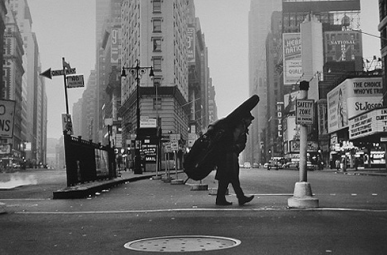
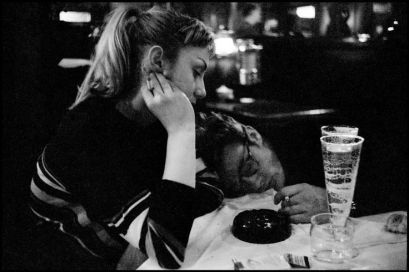
Musician Bill Crow crossing Times SquareOn the backlot of 20th Century Fox during the filming of Planet of the ApesJames Dean and unknown friendVenice Beach, CA. Rock Concert – 1968Miles Davis ‘Milestone’ album coverJames Dean and his young cousin Marcus
The more I looked at this photograph of James Dean, the more fascinating I found it. It looks like it was shot in New York City, most likely in the early to mid 1950’s before Dean made any of his three iconic films. Unfortunately, I do not know who the photographer is but it could be Dennis Stock, (please see comment below from Peter. L. Winker who clears this up. Peter is the editor of the forthcoming book, The Real James Dean: Intimate Memories From Those Who Knew Him Best, to be published later this year). Stock became a friend of Dean’s early on and was one of several photographers who photgraphed Dean during those early times. The painted ad in the background for the 1948 film Brute Force reflects it’s age.
What’s fascinating I felt was the connection the photo makes between the old Hollywood of Burt Lancaster who starred in the film and that of an actor on the verge of stardom. Not just any up and coming actor but someone who would come to represent the beginning of the New Hollywood and the Youth Culture that would explode within a few years.
You can read about Brute Force in my e-book Lessons in the Dark available at Amazon.
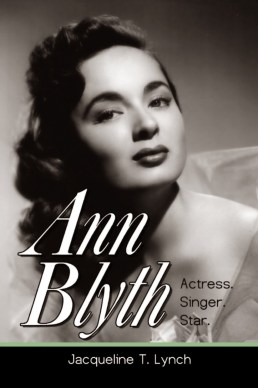
Jacqueline Lynch, author Ann Blyth: Actress, Singer, Starand many other books, as well an ace blogger at Another Old Movie Blog reviewed my book, Lessons in the Dark. There is also a short interview. Check it out at the link below.
Robert Ryan is TCM’s Star of the Month. On Friday, May 6th beginning at 11am (ET) TCM will be showing 13 films of Ryan’s darkest works including The Racket, Act of Violence, On Dangerous Ground, The Set-Up and Beware, My Lovely.
I am happy to announce I am one of eleven contributors to CMBA’s new e-book, Words, Words, Words: Essays on Writers and Writing in Classic Film. The book is only .99 cents with all proceeds going to the National Film Preservation Fund. The book has been published in conjunction with the CMBA’s Words, Words, Words! Blogathon which is currently running through April 15th. You can purchase the book at the link below.
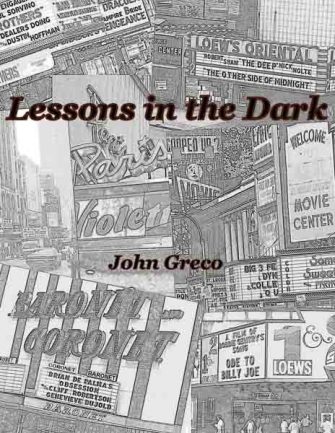
My latest e-book, Lessons in the Dark, is now available exclusively at Amazon. com. Why Lessons? Simply because watching movies for me has always been more than just entertainment. It was art, history and it was education. I have found many classic (old) films to still be relevant to our lives today. For example, my father always talked about how tough it was growing up during The Great Depression. However, it was not until I watched films like Wild Boys of the Road and The Grapes of Wrath that I truly began to understand what it was like. I also came to see how today many of these old films have remained relevant to our society and can teach us not to repeat our mistakes.
In this book I have compiled a series of essays on films that reflect one or more of these themes. I hope you enjoy. Below is a link to Amazon.

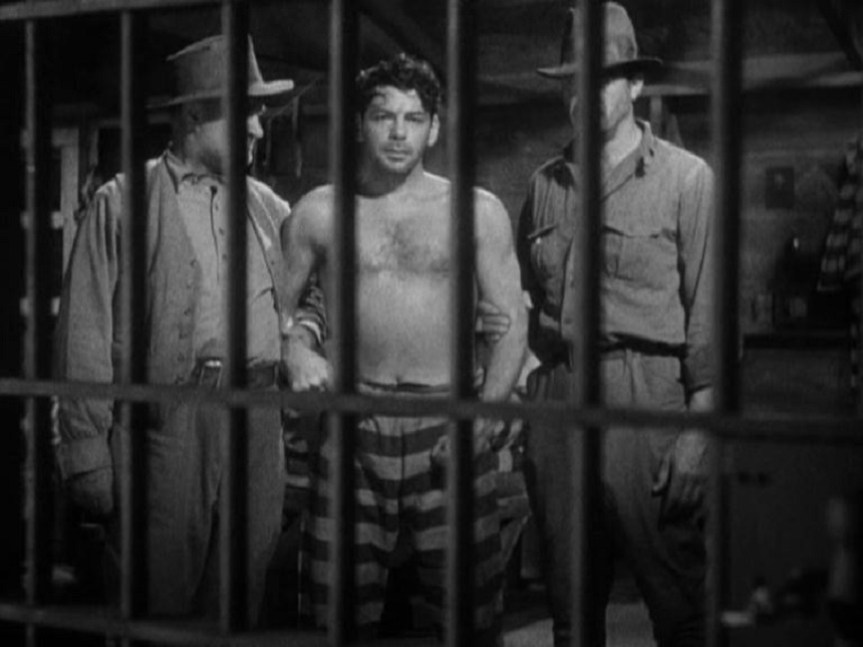 The classic pre-code prison drama, “I Am A Fugitive From A Chain Gang” will be showing on TCM tomorrow morning at 6:15AM eastern time. Be sure to set your DVR.

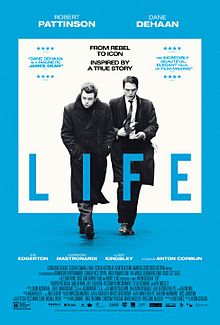 For a short period in 1954-55, Dennis Stock would photograph James Dean in Hollywood, New York and in Dean’s hometown in Indiana. In Life, directed by Anton Corbijn, we follow this short lived friendship between a still unknown actor and a ambitious photographer, still looking for his own big break. Stock works for the Magnum Agency and convinces his boss that this young nobody of an actor is going to be the next big thing as soon as his first film, East of Eden, is released. Stock wants his bosses to convince Life magazine to do the story.





 Ivan G. Shreve Jr. of Thrilling Days of Yesteryear gave a fabulous review of my e-book. You can read it here!
 The more I looked at this photograph of James Dean, the more fascinating I found it. It looks like it was shot in New York City, most likely in the early to mid 1950’s before Dean made any of his three iconic films. Unfortunately, I do not know who the photographer is but it could be Dennis Stock, (please see comment below from Peter. L. Winker who clears this up. Peter is the editor of the forthcoming book, The Real James Dean: Intimate Memories From Those Who Knew Him Best, to be published later this year). Stock became a friend of Dean’s early on and was one of several photographers who photgraphed Dean during those early times. The painted ad in the background for the 1948 film Brute Force reflects it’s age.
 Robert Ryan is TCM’s Star of the Month. On Friday, May 6th beginning at 11am (ET) TCM will be showing 13 films of Ryan’s darkest works including The Racket, Act of Violence, On Dangerous Ground, The Set-Up and Beware, My Lovely.

 John Greco Author/Photographer