
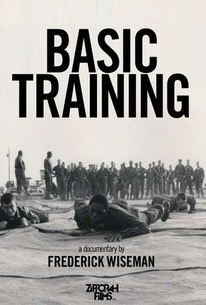
It’s 1970 in Fort Knox, Kentucky, and filmmaker Frederick Wiseman has been given access to film a new group of Army recruits, draftees and enlisted, as they go through eight weeks of basic training. One thing these young men have in common, they all look haunted by what is ahead… Vietnam.
The eight weeks of training is a dehumanizing experience filled with the young boys taught to act robotically the same for the greater good. Those who do not fit in are harassed or even worse. One young soldier, his name is Hickman, cannot march to the cadence of “Left, Left, left, right, left…” He is continually called out to get in step. Eventually, he is pulled out of the squad and “trained” by a Drill Sgt. The kid still can’t get the rhythm. Later, he tells a Pastor that he just doesn’t fit in with the others, never did. He can’t seem to do anything right and has even been threatened with a “blanket party” by his fellow soldiers. Another trainee, a young black accused of not following orders explains to a superior, “Let’s be frank with each other, now you know this is not my country.” He would rather get a dishonorable discharge than follow orders. The officer explains how a dishonorable discharge will follow him through life. He doesn’t care. Most of the boys fall in line. The gun-ho guys who are ready to fight, others to get through it all and come back home alive.
 While it seems filmmaker, Frederick Wiseman was given free access, I tend to doubt it. The Drill Sgt.’s are tough, but they seem a little too nice. With the prospect of Vietnam ahead of them, the trainees are told by the D.I.’s and higher-ups is just do what we teach you and everything will be fine. How comforting.
My skepticism comes from my own experience. I was drafted a year earlier and went through basic training in Fort Jackson, South Carolina. The Drill Sgt.’s were not as kind. Kind was not in their vocabulary. You had to have a good pair of lungs to be a D.I. because they screamed a lot, ridiculed, and trashed you. And as far as the “do what we teach you and everything will be fine,” well, it was more like “boy, your ass is going to ‘Nam, Charlie is waiting and you are going to die, and while you’re there, Jody and me will be making nice with your mama, your sister, and your wife.”
You watch these young soldiers, really boys, going through their training: how to crawl in the mud under barbed wire, hand to hand combat, bayonet training, weapon (M-16) training. You cannot help but wonder how many of these boys never made it back home. The strangest training segment in the film and this is something I did not experience, is a training class on how to correctly brush your teeth! Brush your teeth and win the war. We lost in Vietnam, many boys lost their lives, and many more came home disabled mentally and/or physically.
When I came home, I didn’t talk about Vietnam. Not because of any trauma or horrific experiences from the war, it had more to do with the people back home. There were two camps, those who favored the war and wanted America to bomb all of Southeast Asia out of existence and those who were part of the anti-war movement and saw you as a baby killer. I belonged to neither camp. Like the trainee, Hickman who I mentioned earlier, I just didn’t fit in anywhere, and so I didn’t talk about it. It took many years before I told people I was a Viet Vet and to this day I still don’t know where I belong.

 Set in San Francisco. Hammett (Frederic Forrest) is already pumping out short stories to Black Mask but is not making much money. His old boss Jimmy Ryan (Peter Boyle) from his days as a Pinkerton detective, and the model for Hammett’s Continental Op, shows up at his front door. He’s not there to reminisce about the good old days, he’s on a case and wants Hammett’s help. Toss in Chinatown, crooked cops, dangerous dames and an eerie mood of disillusionment and you have a classic tribute to the noirs of yesteryear.
 John Greco Author/Photographer